
Resume
(download William Nuckols's resume in Adobe PDF)
William H. Nuckols III Bio
Mr. William Nuckols is a scientist by background and a policy expert and communicator by practice.
His 20+ years of work in the field of environmental science and policy is well respected, and he has received awards and letters recognizing his contributions by President Obama, the Assistant Secretary of the Army for Civil Works, members of Congress and members of industry.
He is an expert at combining the capabilities of multiple government agencies and NGOs and working toward a unified and targeted goal. In particular Mr. Nuckols has led several projects which have utilized needs expressed by the military for training or proof of concept trials for weapons systems with interests of federal environmental agencies such as DOC/NOAA, DOI, USDA, DHS and EPA. His track record for success includes leveraging the skills and interests of senior career and political SES officials along with representatives from the Executive Office of the President to accomplish high profile, multi-agency projects in Florida, Washington State and Hawaii.
His skills in strategic communications and his experience as a spokesperson for federal and NGO organizations has resulted in his appearances on international, national and regional TV. Radio interviews of Mr. Nuckols have appeared several times on National Public Radio in the United States, Canadian Broadcast Company, and in Australia and Europe. Articles about Mr. Nuckols’ work on oceans have appeared in print in numerous publications in several languages.
His expertise in multi-agency programs and policies has been called upon to brief members of Congress, officials in multiple Presidential Administrations, as well as elected and career officials in state governments and representatives of foreign countries.
Will’s environmental work is diverse and has ranged from designing the recreated wetlands half of a 1,100 acre island on the Chesapeake Bay, to cleaning up derelict fishing gear from the Pacific Northwest and legacy marine debris in Hawaii and Florida. His work on climate change adaptation includes analyzing Atlantic Coast States’ plans for responding to sea level rise for EPA. His projects in the southeast United States has included work that combined the salvage capabilities of the US Army and Navy, the marine transportation capabilities of the Army, the facilities and diving support of the US Coast Guard, the roll-on-roll-off cargo capabilities of Broward County, Florida’s Port Everglades and solid waste and waste-to-energy expertise of the US EPA and the Florida Department of the Environment to design and implement an effort that worked to recover materials from the ocean that were continuing to kill coral reefs off of the Ft. Lauderdale shoreline and turn them into a resource that would produce power for Florida families and businesses.
From 2007-2009 Mr. Nuckols directly staffed the Deputy assistant Secretary of Commerce and NOAA Chief of Staff as their military liaison. He has worked with a number of non-profit groups, and is the Director for Policy for the Man in the Sea Memorial Monument, Executive Director for Eco-Tan, a non-profit environmental organization, and serves as the Director for Public Affairs for Team 4MIL – a component of the Wounded Warrior Project.
Since 1998 Mr. Nuckols has served as the Principal of W.H. Nuckols Consulting, an environmental policy and strategic communications company located in Washington, D.C.
He is an avid SCUBA Diver, lover of sea kayaking, and is an on and off-road bike racer.
| Major Achievements | Professional Experience | Education, Qualifications & Training | Publications Papers Reports and Professional Presentations | Awards and Recognition |
Profile
William Nuckols is a seasoned management consultant and scientist with over 20 years experience in public policy and strategic communications. His extensive work with federal agencies and Congress provides him with a deep knowledge of the individuals and organizational idiosyncrasies that impact policy development and regulatory implementation at the state and federal levels. Nuckols moves seamlessly between serving as a spokesperson to supporting senior Administration officials and elected officials as a subject matter expert on a wide range of environmental policy topics.
- Conceived and implemented a major federal/state/local marine environmental restoration and protection project in South Florida.
- Coauthored EPA report on climate change and sea level rise adaptation strategies for the Mid-Atlantic Region, published in Environmental Research Letters.
- Created the first-ever hazardous dive-training program for the U.S. military to address derelict fishing gear in Puget Sound, WA.
- Developed research initiative to use Military LADAR technology to locate and remove marine debris from the Pacific Ocean.
- Worked with Congress on behalf of the National Blue Crab Industries Association to pass legislation to preserve sustainable domestic blue crab and oyster industries.
Education, Qualifications & Training
Education:
• University of Charleston/Medical University of South Carolina joint program in Environmental Science. Master of Science. 1998.
• University of Wisconsin-Madison. Institute for Environmental Studies. 1994-1996.
• The College of William and Mary. Government and Philosophy double major. Bachelor of Arts. 1992.
PROFESSIONAL EXPERIENCE

Current Position
W.H. Nuckols Consulting 1998 – present
Principal
Lead an environmental policy and strategic communications firm whose clients have included: U.S. Department of Commerce/NOAA, U.S. EPA, Coastal America (a federal committee comprising 13 Departments and the Executive Office of the President), State of California, State of Florida, J.M. Clayton Company, Gahagan and Bryant Associates, Blue Frontier Campaign, Homeland Policy Security Institute Group, Team 4MIL, and others.
Government Relations
- Developed and represented organizations’ environmental policy positions before Congress, federal and state agencies, NGOs and the media.
- In the 112th Congress, worked in a bipartisan way to draft and have introduced three bills in the House and a bill in the Senate which resulted in the successful inclusion of a provision in the National Defense Authorization Act (NDAA) which was signed by President Obama on January 2, 2013.
- Crafted corporate policy positions on labor, immigration, international trade, and marketing and represented those interests before Executive agencies and Congress.
- Prepared Congressional testimony, bill language, public speeches, press releases, position papers, reports, and technical presentations for policy staff, scientific staff and lay audiences.
- Lead client office visits with Congressional members, professional staff and Committee staff.
- Organized and implemented Capitol Hill events and build bipartisan House and Senate coalitions, including the largest ever green energy and ocean policy Hill lobby day in 2011.
Strategic Communications and Campaigns
- Managed national, regional, local, and international outreach efforts for multi-agency federal environmental projects. Manage media campaigns combining the collective resources of county, state, and federal public affairs teams for greatest effect.
- Served as federal government spokesperson for multi-federal agency initiative.
- Lead media campaign targeted to generate coverage in multiple markets to raise awareness about sequestered EPA climate change research, reports, and the muzzling of EPA scientists.
- Served as the Senior Policy Advisor for the Energy and Environment Team for Obama 2012 reelection campaign. Staffed the Joint Press Office for the 2012 Democratic National Convention.
Managing Multidisciplinary Teams
- Fostered policy development between multi-agency groups. Facilitated partnerships between a multitude of federal agencies, corporations, non-profits, and universities.
- Organized and implemented conferences, technical workshops, and national level federal functions.
- Lead projects, including developing mission scope, to combine military salvage, civilian agency diving, liability experts and tribal natural resource representatives to address environmental cleanup needs.
Project Management
- Conducted strategic planning efforts for federal and private sector clients. Analyzed program performance and provide recommendations on remedies to structural program challenges.
- Developed scopes of work, budgets, manage contracts , and prepare briefings for clients. Prepared Requests for Proposals and responses to grant proposals on behalf of clients. Manage employees and direct subcontractors.
- Served as project manager for a host of multi-agency projects nationally addressing coastal resource restoration and projection. Advised the Port of Baltimore and the U.S. Army Corps of Engineers through the Poplar Island site development process.
- Developed political and procedural steps for fisheries trade associations’ representation at the U.S. International Trade Commission.
Work History
- 1998 –present Principal, W.H. Nuckols Consulting
- 1998–2000 Ecologist, Gahagan and Bryant Associates
- 1996–1998 Habitat Ecologist/SC Sea Grant Fellow, NOAA Coastal Services Center
- 1994–1996 Manager/Database Manager, Williamson Bike Works
- 1991–1993 Manager, The Open Road
- 1987–1991 Lab Technician, Virginia Institute of Marine Science (VIMS)
Publications:
• “Maryland.” In James G. Titus and Daniel Hudgens (editors). The Likelihood of Shore Protection along the Atlantic Coast of the United States. Volume 1: Mid-Atlantic. Nuckols, W.H., P. Johnston, D. Hudgens, and J.G. Titus. 2010. Report to the U.S. Environmental Protection Agency. Washington, D.C.
• “Government’s plan for development of most land vulnerable to rising sea along U.S.
Atlantic Coast.” J. G. Titus, D. E. Hudgens, W. H. Nuckols, M. Craghan, D. L. Trescott,
J. A. Alexander, M Cela, W Clark , C H Hershner, A Hickok, J Kassakian, C J Linn,
T M McCue, J Tanski, and J. Wang. Environmental Research Letters, 2009.
• “Is the scale of your coral problem resulting in project paralysis? Unusual partners may be the solution.” W. Nuckols. Proceedings of the 2008 International Coral Reef Symposium.
• “Conserving America’s Wetlands: Implementing the President’s Goal.” Council on Environmental Quality, Executive Office of the President, April 2008.
• “How to build project support by engaging the media. Lessons learned from the field: You can’t do it alone.” W. Nuckols. Proceedings of Coastal Zone 07. 2007.
• “Conserving America’s Wetlands: Implementing the President’s Goal.” Council on Environmental Quality, Executive Office of the President, April 2005.
• “DOD’S Innovative Readiness Training Program: Matching Military Training with the needs of Coastal Communities.” W. Nuckols. Proceedings of the Coastal Zone Management Conference. 2005.
• “What Can America Learn from How Maryland Is Responding to Coastal Erosion
and Rising Sea Level?” J. Titus and W. Nuckols. Proceedings of the 13th Biennial Coastal Zone Conference Baltimore, MD. 2003.
• “Planning for Sea Level Rise Along the Maryland Shore.” W. Nuckols. Proceedings of the 12th Biennial Coastal Zone Conference, 2001
• “Success Measurers for Aquatic Habitat Restoration.” Ken Turgeon, W. Nuckols and P. Sheehy. Coastal Zone Management Conference. 2001.
• “GIS and High Precision GPS for the Collection and Documentation of Vegetation Data.” Proceedings of the 2001 ESRI Annual Users Conference.
• “Restoring Shellfish Beds with Dredged Material in NY/NJ Harbor. Beneficial Uses of Dredged Material for Habitat Creation, Enhancement and Restoration in NY/NJ Harbor.” DRAFT. February 1999.
• “Building Artificial Reefs with Dredged Material in NY/NJ Harbor and the New York Bight. Beneficial Uses of Dredged Material for Habitat Creation, Enhancement and Restoration in NY/NJ Harbor.” DRAFT. February 1999.
• “Improving Coastal Management Decisions Using a GIS and NMFS Survey Data.”
W. Nuckols. 1998. Proceedings of the 1998 ESRI Annual Users Conference.
Select Papers/Reports/Professional Presentations:
—A Plan for the Recovery of the Artificial Tire Reef in Ft. Lauderdale, Florida, Produced for the NOAA National Marine Fisheries Service SE Region and the NOAA Marine Debris Program. William Nuckols and Terry Gray. December 2006.
—How to Get the Military to Assist with Your Restoration Project: The DoD Innovative Readiness Training (IRT) Program. The 3rd National Conference on Coastal and Estuarine Habitat Restoration: Forging the National Imperative. December 2006.
—Value of Navy Lands in the in the Chesapeake Mid-Bay Region: Bloodsworth Island – a vanishing ecological and military resource. International Tidal Wetlands Conference: Beneficial Use of Dredged Materials to Restore Chesapeake Bay Wetlands. Salisbury University. June 2006.
—What Can America Learn from How Maryland Is Responding to Coastal Erosion
and Rising Sea Level? Coastal Zone Conference. 2003.
—The 1996 Reauthorization of the Magnuson Fisheries Conservation and Management Act: Issues and Implementation, March, 1997.
—Mitigation Banking: The Responsible Use of a New Management Tool. 1997.
Awards and Recognition:
•Coastal America 2008 Partnership Award, an award presented on behalf of Barack Obama, President of the United States, for leadership in the Florida Artificial Tire Reef Cleanup project.
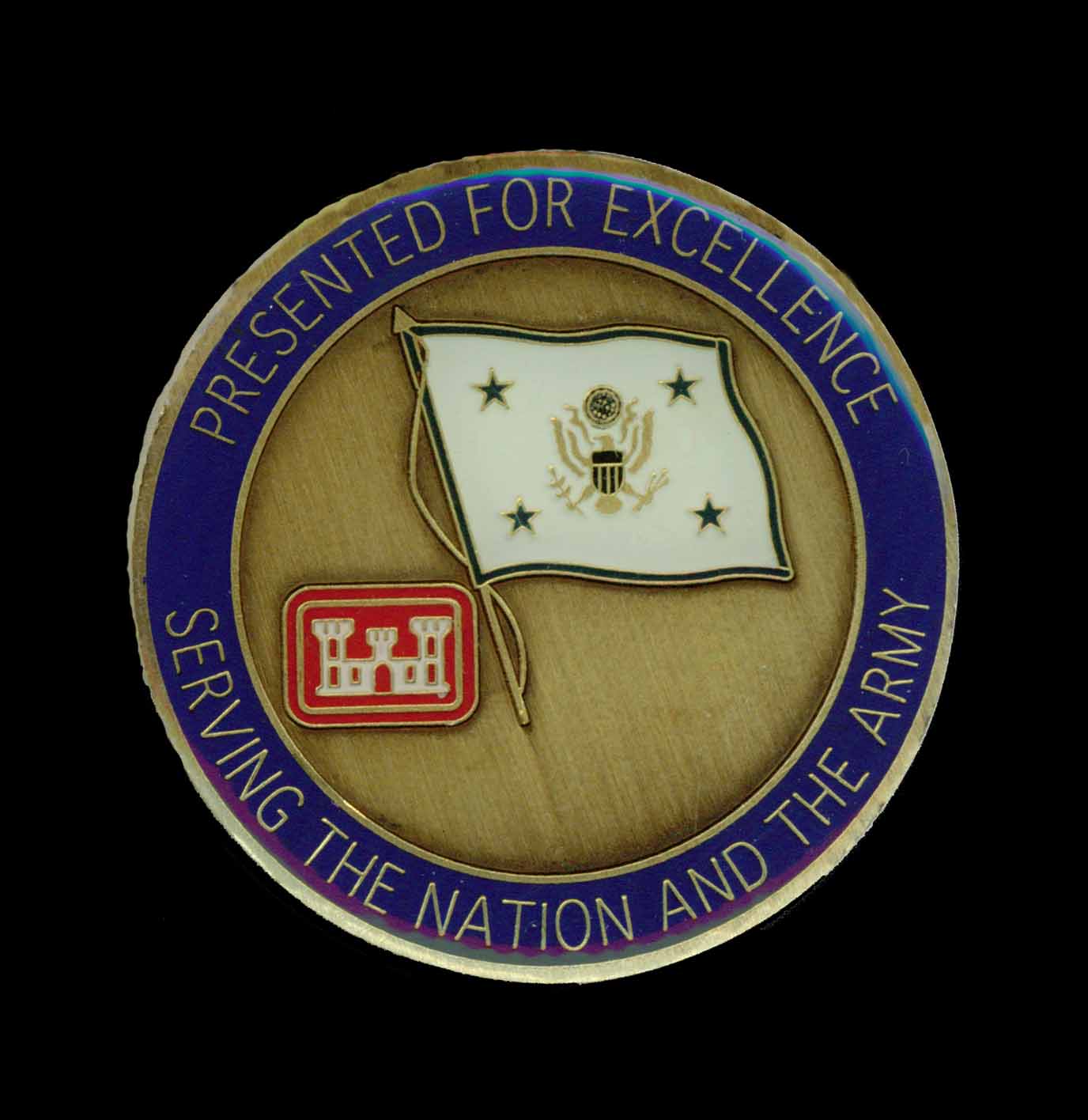
•US Army Corps of Engineers “Gold Coin” presented by USACE Deputy Assistant Secretary Doug Lamont for services provided for the Festival Park restoration project in Manteo, NC.
•Letter of gratitude from Congressman Rick Larsen, for 2005 project that trained Navy divers to remove derelict fishing nets from Puget Sound.
•Letter recognizing outstanding commitment and dedication from the Chesapeake Bay Seafood Industries Association.
Certifications:
SSI Open Water Diver certified, DAN O2 provider
Affiliations:
• Associate Member, Society of Environmental Journalists
• Man in the Sea Memorial Project, Homeland Security Policy Institute Group
•Member of several environmental organizations including: The Chesapeake Bay Foundation, Oyster Recovery Partnership, International Game Fish Association, The Nature Conservancy and
Ducks Unlimited
Personal interests:
SCUBA Diving, sea kayaking, on and off-road bike racing, photography, videography, retriever training, and raising his beloved daughter.
Download a copy of William Nuckols's resume in Adobe PDF
Contact information: will@WilliamHNuckols.com 202-484-1390 ; 443-994-1493 cell
620 Sprintsail Way
National Harbor, MD 20745